DK Science: Amphibians
Amphibians generally start life in water, but later change so that they can live on land. Most return to the water to mate. The life cycle involves three stages: egg, larva, and adult. The change from larva to adult is known as metamorphosis. Amphibians are ectothermic (cold-blooded) animals that have a bony internal skeleton. They have small lungs and can also breathe through their smooth skin, which must be kept moist.
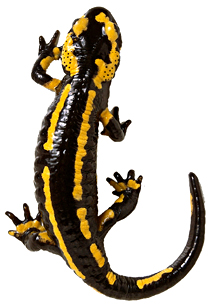
The bright stripes on the fire salamander warn other animals that it tastes unpleasant. Like many salamanders, it spends all of its adult life on land. Newts, on the other hand, always return to water to breed. Salamanders and newts are carnivorous. They have a slim body, a long tail, and four legs of about the same size.
Amphibians can lose water through their skin. There are no scales or hair protecting the skin. Most live in damp places. There are about 5,000 species in three orders.
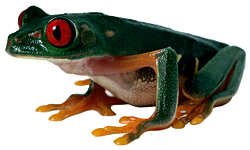
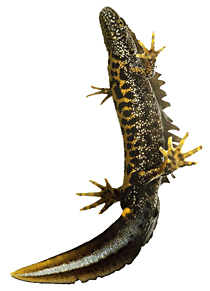
A frog looks wet all the time because glands in its skin produce mucus to keep it moist. The frog can then absorb oxygen through its thin skin directly into the bloodstream. Frogs are the only amphibians that can hop. Some have webbed feet and are good swimmers. They live mainly on land and catch worms and insects with their long, sticky tongue.
A frog lays its eggs in water, because they have no shell to stop them from drying out. Tadpoles hatch from the eggs and take about 12 weeks to grow and change into frogs. At first the tadpoles breathe like fish, using gills, but as they change, lungs replace the gills. The tadpoles grow back legs, front legs, a big head, and finally their tail disappears.