2005 World History
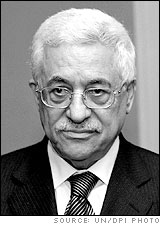 Mahmoud Abbas (1935– )  Mahmoud Ahmadinejad (1956– )  Angela Merkel (1954– )  Ellen Johnson-Sirleaf (1938– ) |
- 2005
- Worldwide aid pours in to help the 11 Asian countries devastated by the Dec. 26, 2004, tsunami (Jan.). Mahmoud Abbas wins presidency of the Palestinian Authority in a landslide (Jan. 9). The Sudanese government and rebels from southern Sudan sign a peace agreement to end a 20-year conflict that has claimed about 2 million people (Jan. 9). George W. Bush is officially sworn in for his second term as president (Jan. 20). Iraqi elections to select a 275-seat National Assembly take place despite threats of violence. A total of 8.5 million people voted, representing about 58% of those Iraqis eligible to vote (Jan. 30). In State of the Union address, President Bush announces his plan to reform Social Security; despite months of campaigning, his plan receives only a lukewarm reception (Feb. 2). Saudis (men only) are allowed to vote for the first time in municipal elections (Feb. 10). Former Lebanese prime minister Rafik Hariri > a nationalist who had called for Syria's withdrawal from Lebanon—is assassinated (Feb. 14). The Terry Schiavo case becomes the focus of an emotionally charged battle in Congress (March 20). Schiavo dies 13 days after a federal judge refuses to order the reinsertion of her feeding tube (March 31). Pope John Paul II dies (April 2). Violent protests follow March elections in Kyrgyzstan, which international monitors deem severely flawed. President Askar Akayev flees the country and then resigns (April 4). Benedict XVI becomes the next pope (April 24). The Syrian military, stationed in Lebanon for 29 years, withdraws (April 26). Tony Blair becomes first Labour Party prime minister to win three successive terms, but his party loses a large number of seats in the elections (May 5). South Korean scientist Hwang Woo-suk announces that he has devised a new procedure to successfully produce human stem cell lines from a cloned human embryo (May 20), but claim is discredited in Dec. 2005. The European Union abandons plans to ratify the proposed European constitution by 2006 after both France and the Netherlands vote against it (June 16). Former Tehran mayor Mahmoud Ahmadinejad, a hard-line conservative, wins Iran's presidential election with 62% of the vote. He defiantly pursues Iran's nuclear ambitions over the course of his first year (June 24). Supreme Court Justice Sandra Day O'Connor announces her retirement (July 1). NASA's Deep Impact spacecraft hits comet Tempel 1 in effort to research primordial remnants of our solar system (July 4). London hit by Islamic terrorist bombings, killing 52 and wounding about 700. It is Britain's worst attack since World War II (July 7). Group of Eight industrial nations pledge to double aid to Africa to $50 billion a year by 2010, cancel the debt of many poor countries, and open trade. (July 8). Federal appeals court upholds lower court decision that so-called Partial-Birth Abortion Ban Act is unlawful because it fails to make an exception to the law for women whose health would be in jeopardy without the late-term procedure (July 8). Pentagon assessment finds Iraq's police force is, at best, “partially capable” of fighting the country's insurgency. The U.S.'s eventual withdrawal plan hinges upon Iraqi security forces replacing U.S. soldiers: “As Iraqis stand up, Americans will stand down,” President Bush had stated (July 20). The Irish Republican Army announces it is officially ending its violent campaign for a united Ireland and will instead pursue its goals politically (July 27). President Bush signs the Central American Free Trade Agreement (CAFTA), which will remove trade barriers between the U.S. and Costa Rica, the Dominican Republic, El Salvador, Guatemala, Honduras, and Nicaragua (Aug. 2). The Indonesian government and the Free Aceh Movement (GAM) sign a peace accord to end their nearly 30-year-long civil war (Aug. 15). Israel begins evacuating about 8,000 Israeli settlers from the Gaza Strip, which has been occupied by Israel for the last 38 years (Aug. 15). Hurricane Katrina wreaks catastrophic damage on the Gulf Coast; more than 1,000 die and millions are left homeless. Americans are shaken not simply by the magnitude of the disaster but by how ill-prepared all levels of government were in its aftermath. (Aug. 25–30). Chief Justice William H. Rehnquist, who served on the U.S. Supreme Court for 33 years, dies (Sept. 3). John Roberts, Jr., becomes 17th chief justice of the U.S. Supreme Court (Sept. 22). Another major hurricane, Rita, ravages the Gulf Coast (Sept. 23). House majority leader Tom DeLay is accused of conspiring to violate Texas's election laws. He steps aside from his House leadership position (Sept. 28). A 7.6 earthquake centered in the Pakistani-controlled part of the Kashmir region kills more than 80,000 and leaves an estimated 4 million homeless (Oct. 2). President Bush selects Harriet Miers, White House counsel, to replace Justice Sandra Day O'Connor (Oct. 3). Angela Merkel, leader of the Christian Democratic Union, which narrowly prevailed over Chancellor Gerhard Schröder's Social Democratic Party in September elections, becomes the country's first female chancellor (Oct. 10). Millions of Iraqi voters ratify a new constitution (Oct. 15). Former Iraqi president Saddam Hussein goes on trial for the killing of 143 people in the town of Dujail, Iraq, in 1982 (Oct. 19). Number of deaths of U.S. soldiers in Iraq reaches 2,000 (Oct. 25). Harriet Miers withdraws her Supreme Court nomination after strong criticism from the president's conservative base (Oct. 27). Several weeks of violent rioting begins in the impoverished French-Arab and French-African suburbs of Paris after two boys are accidentally killed while hiding from police (Oct. 27). A federal grand jury indicts I. Lewis Libby, Vice President Cheney's chief of staff, with obstruction of justice and perjury in connection with a White House investigation (Oct. 28). Ellen Johnson-Sirleaf defeats soccer star George Weah in Liberia's presidential election. She becomes Africa's first woman head of state (Nov. 11). Israeli prime minister Ariel Sharon quits as head of the Likud Party, which he founded, to start a new, more centrist organization, called Kadima (Nov. 21). California Republican congressman Randy “Duke” Cunningham resigns after pleading guilty to taking at least $2.4 million in bribes (Nov. 28). The Sept. 11 Public Discourse Project reports that the country is “alarmingly vulnerable to terrorist strikes” (Dec. 5). The New York Times reports that in 2002, Bush signed a presidential order to allow the National Security Agency to spy on Americans suspected of being connected to terrorist activity without warrants (Dec. 15). About 11 million Iraqis (70% of the country's registered voters) turn out to select their first permanent Parliament since the overthrow of Saddam Hussein (Dec. 15). Pennsylvania judge rules teaching of intelligent design in biology class is unconstitutional (Dec. 20).